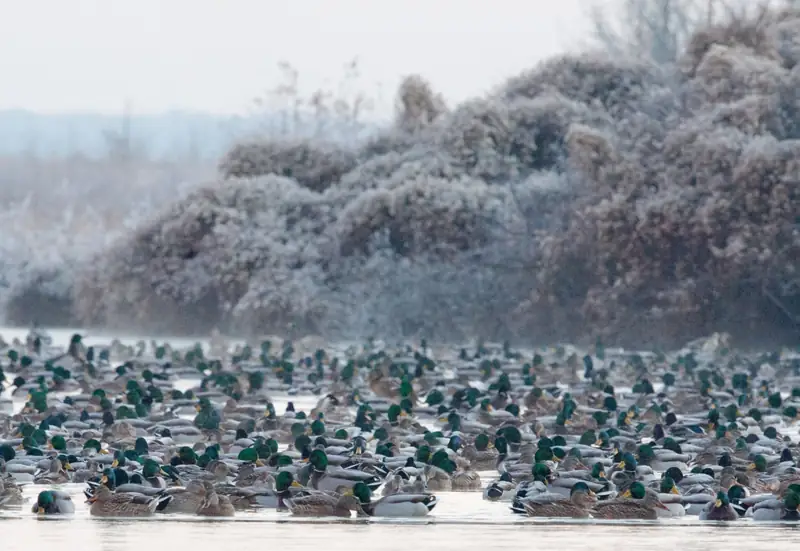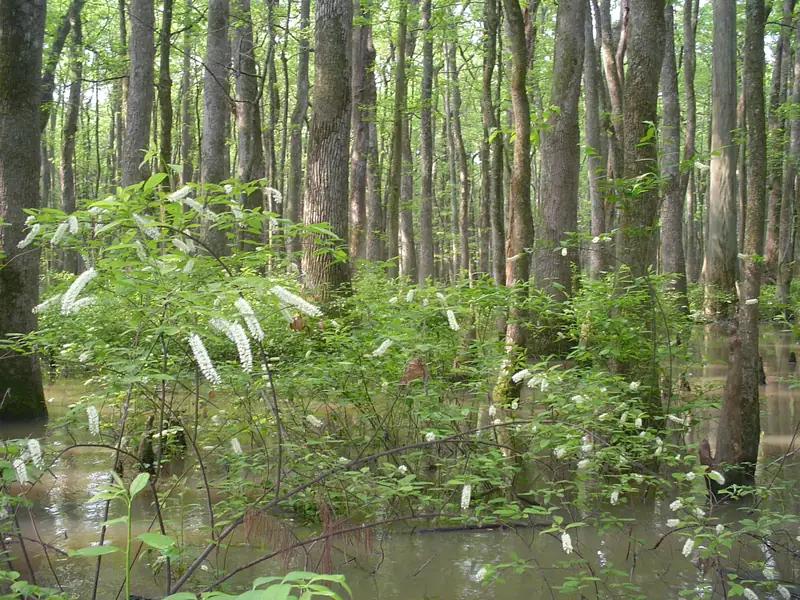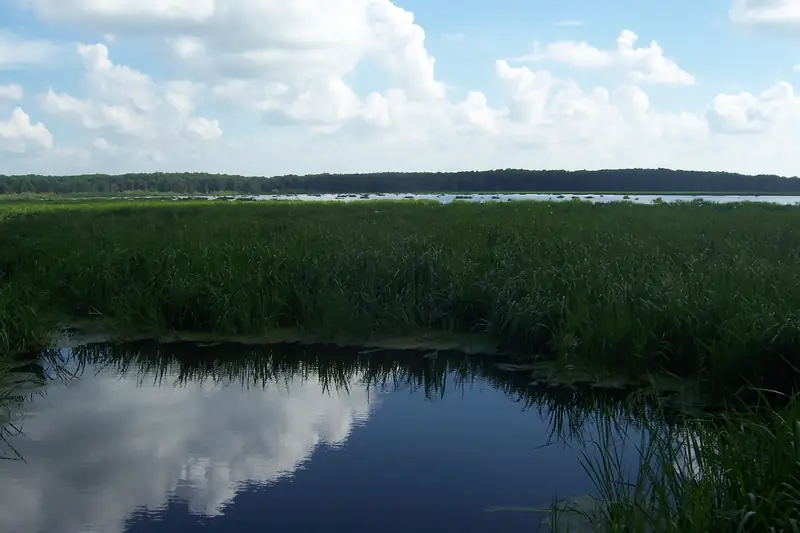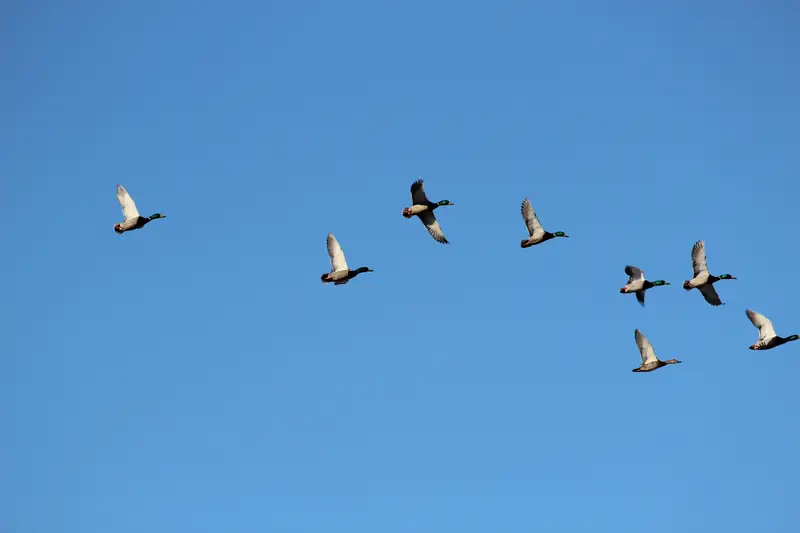
Reelfoot Lake is one of the most famous duck spots in the South. It's a shallow, stump-filled lake in the far northwest corner of Tennessee, formed by the New Madrid earthquakes of 1811–12, ringed with cypress and cutgrass, and known for huge permanent blinds, loud calling and a long local boat-building tradition. It's also public, which means anyone with the right license and permit can hunt it.
Reelfoot has more rules than most places, and a few of them catch visitors every year. This guide covers how hunting on the lake works for 2026-27, the water situation this fall, and practical tips. Rules and dates link to TWRA, USFWS and the Tennessee Secretary of State. Our Reelfoot Lake spot guide has maps and the live lake level.
WMA versus refuge: where you can hunt
The first thing to understand is who manages which water.
- Reelfoot WMA, run by the Tennessee Wildlife Resources Agency, covers about 24,000 acres including the lake waters. This is where public duck hunting happens (TWRA Reelfoot WMA, checked Oct 22, 2026).
- Reelfoot National Wildlife Refuge and Lake Isom National Wildlife Refuge, run by the U.S. Fish and Wildlife Service, are closed to waterfowl hunting. Parts of the refuge are closed to all public entry Nov 15–Mar 15, and some refuge waters are closed Nov 15–Jan 31. Lake Isom allows boats of 10 horsepower or less, and the refuges are day-use only (USFWS 2026-27 Reelfoot and Lake Isom NWR regulations, checked Oct 22, 2026).
The posted 2026-27 refuge brochure was labeled a draft when we checked. Not confirmed Whether the final version changes anything is Not confirmed (check the official source).
The refuges are why Reelfoot holds so many birds. Huge numbers of ducks and geese rest on closed water and trade back and forth to feed. Your job is to set up on legal WMA water along those flight lines, not to sneak toward refuge boundaries. Know the boundary signs and the refuge map before you go.
What you need to carry
- Tennessee license, Waterfowl Supplemental (or a Sportsman license), Migratory Bird Permit and Federal Duck Stamp (TWRA Hunting Guide pp. 8–10). Full details and prices are on our Tennessee laws page.
- Reelfoot Lake Preservation Permit: $3 for one day, $10 for three days, $16 for a year. It's required to hunt, fish, trap or boat on the WMA. Exempt: Sportsman and Lifetime Sportsman license holders, youth under 16, and residents 65 and older (TWRA Hunting Guide p. 11; TWRA Reelfoot WMA).
- Not covered by reciprocity. The Tennessee–Arkansas reciprocal agreement covers the Mississippi River, not WMAs. Arkansas hunters need Tennessee paperwork for Reelfoot (AGFC Code H1.03).
Season dates and the 3 p.m. rule
Tennessee's 2026-27 duck season is Nov 28–29 and Dec 5, 2026–Jan 31, 2027. Youth days are Feb 6 and 13, 2027; veterans and active military days are Feb 7 and 14 (TWRA Hunting Guide p. 55).
On Reelfoot WMA, shooting ends at 3 p.m. Central, except on the last day of each season segment, when it runs to sunset (TWRA Reelfoot WMA). The 3 p.m. close catches visitors who are used to sunset statewide, or to Arkansas' noon. Set an alarm.
The daily limit is 6 ducks, with no more than 4 mallards (2 hens), 3 wood ducks, 3 pintails, 2 canvasbacks, 2 redheads, 2 black ducks and 1 mottled duck. Scaup are 1 a day through Dec 17 and 2 a day from Dec 18 (TWRA Hunting Guide p. 55).
Check the rules and the water
Confirm this season’s rules on our state law pages or the agency’s own site, check draw and permit deadlines, and look at today’s river levels on the migration map. Areas can close or flood on short notice.
Blinds: tiers, hopping and the 200-yard rule
Reelfoot is one of TWRA's tier-system lakes. Most of the big permanent blinds are Tier 1 sites drawn for the whole season, with some Tier 2 (TWRA-built, drawn for short periods) and Tier 4 (first come, first served) locations. Reelfoot permanent blinds are registered Feb 18–July 31 and need a Reelfoot Duck Blind Permit (TWRA Hunting Guide p. 83; TWRA public land duck hunting).
We explain the tier system in full in How Tennessee WMA Duck Quota Hunts and Tier Blinds Work. The short version for Reelfoot:
- Leftover drawings for Reelfoot are held at Reelfoot State Park, 2595 State Route 21E, Tiptonville, at 6 p.m. on Nov 9, Dec 7 and Jan 4 (TWRA).
- Blind hopping: if a Tier 1 permit holder isn't in the blind by legal shooting time, the first party to occupy it may hunt it that day. This doesn't apply to Tier 2 blinds (TWRA).
- Freelancing: you may hunt from temporary blinds, including a boat blind, but a temporary blind must be at least 200 yards from any permanent blind, and all decoys and blind materials come out every day (Tenn. Comp. R. & Regs. 1660-01-02).
- No plastic or metal decoy containers while hunting the lake. Use cloth or mesh bags (Tenn. Comp. R. & Regs. 1660-01-02).
- Wheelchair blinds: Reelfoot has blind sites for wheelchair-bound hunters. Applications were due by noon on Oct 23, 2026 (TWRA).
Water: what to watch this fall
The lake level is measured by the USGS gauge Reelfoot Lake near Tiptonville (07027000). It read about 11.1 feet on the morning of Oct 22, 2026 (USGS 07027000). Tennessee law sets the lake's ordinary low-water mark at the top of the spillway gates, and by our reading of the gauge datum the lake was roughly a foot or more below that this October. That conversion between datums is approximate, so treat it as a rough guide, not a precise number.
What that means in practice: a low Reelfoot is a shallow Reelfoot. Expect some cutgrass holes and back blinds to be dry or barely wet, more exposed stumps, and harder going at some ramps. Birds that would scatter into the cutgrass at normal levels may bunch on open water and whatever potholes hold water. Check the gauge before every trip; our migration map shows it on the River levels layer. If you're new to gauges, read How to Read River Gauges for Mid-South Duck Hunting.
Getting on the lake
Reelfoot Lake State Park runs the public ramps. As of Oct 19, 2026, Long Park was partly closed for pier work for about 12 weeks but its ramp was open, and the Eagle Basin Day Use Area had been closed since June 12, 2026 (Tennessee State Parks). The park has listed different ramp counts on different pages; use the current park map. WMA land is reached from TN-78 north of Tiptonville via Eagle Nest Road, Ernie Pierce Road or Choctaw-McCutcher Road (TWRA).
How Reelfoot hunts: tips
These come from time on the lake, not from any rulebook:
- Run slow. The lake is a flooded forest full of stumps just under the surface. Stay on marked boat trails, especially in the dark and at low water. There's a reason local boats are narrow, flat and shallow.
- Scout in daylight. Run your route the afternoon before. Note which permanent blinds look used and which look abandoned, and where open water sits relative to the refuge.
- Hunt the flight lines. Refuge birds trade back and forth all morning. A spread on the route between rest water and feeding water can work right up to the 3 p.m. close.
- Leave a landing hole. Give birds a clear 15- to 20-yard hole in front of the blind and put your best decoys around it.
- Call to the conditions. Loud, sharp calling is a Reelfoot tradition, and it carries in wind. On calm, foggy mornings, soft calling and patience usually work better.
- Plan for fog and ice. Fog is common. When the potholes freeze, an open hole with a tight bunch of decoys draws birds, but you still have to pull everything at day's end.
- Go midweek and late. The lake is crowded on weekends and early in the season. Weekdays and the late season thin the crowd.
Safety on Reelfoot
Wind can build real waves on the open basins, and the water is cold by December. Wear a life jacket in the boat, carry a GPS and a backup light, and tell someone where you'll be. Our flooded timber safety guide covers cold-water survival and boat handling in stumps.
Gear for Reelfoot
A shallow-draft boat with a mud motor or a trimmed-up outboard handles low water best. Freelancers need a boat blind or a portable blind, chest waders for setting decoys in cutgrass, and mesh decoy bags (remember: no plastic or metal boxes). Two to four dozen decoys is plenty for a pothole or a cutgrass edge. Hardcore Waterfowl and Bass Pro Shops' house brands both sell well-reviewed mesh decoy bags with backpack straps that make loading the boat in the dark easier.
FAQ
Can you duck hunt Reelfoot National Wildlife Refuge?
No. Waterfowl hunting is prohibited on Reelfoot NWR and Lake Isom NWR. Public duck hunting happens on TWRA's Reelfoot WMA (USFWS, checked Oct 22, 2026).
What time does duck hunting end on Reelfoot?
3 p.m. Central on the WMA, except the last day of each segment, when it runs to sunset (TWRA).
How much is the Reelfoot Preservation Permit?
$3 for a day, $10 for three days, $16 for a year. Sportsman and Lifetime Sportsman holders, youth under 16 and residents 65 and older are exempt (TWRA Hunting Guide p. 11).
Can I use plastic decoy boxes on Reelfoot?
No. Plastic or metal decoy containers are banned while hunting the lake (Tenn. Comp. R. & Regs. 1660-01-02).
Dates, rules and prices on this page were last checked Oct 22, 2026. If an agency page and this article disagree, the agency page wins.
See something wrong or out of date? Report a correction.
We hunt public water in the Mid‑South and write from the agencies’ own pages. Every rule, date and fee links to its official source and shows the day we checked it. Where we couldn’t confirm something, we say so.
How we check our facts