Built from the official sources
An independent guide to public duck hunting in the Mid‑South.
Midsouth Waterfowl is an independent, plain-English guide to public-land duck hunting in Arkansas, Tennessee, Mississippi and Louisiana.
Who it’s for
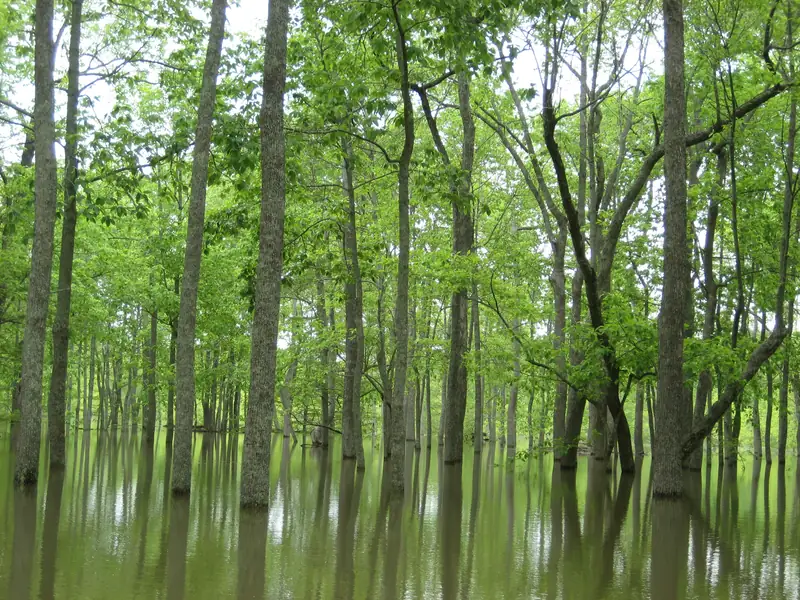
It’s written for the hunter who doesn’t have a lease or a club: the walk-in timber hunter on a state WMA, the kayak hunter paddling into a refuge slough before daylight, the small-boat crew running the Mississippi River chutes, and the first-timer trying to work out which permit, stamp and draw they actually need. If you hunt the Mid-South on ground anyone can apply for, this site is built for you.
State and federal rules for that hunter are spread across four state agencies, a dozen national wildlife refuges and dozens of PDFs that change every year. We put the parts that matter in one place: where the public land is, which draws open when, what the rules are on each area, what the water is doing, and what the agencies’ own surveys say about the birds.
- Tips from the waterHow each place hunts, written in our own words from time spent on these rivers and bottoms.
- Rules from the agenciesEvery rule, date and fee links to the official page and shows the day we checked it.
- Not confirmed means not confirmedIf an agency hasn’t published something, we say so instead of guessing.
How we check our facts
Every rule, date and fee on this site is researched from official public sources, which are linked where it appears, and rechecked against them over time.
- Primary sources only. Seasons, limits, fees, permits, shooting hours and area rules come from the agency that sets them: the current-year state guidebook or regulation, the agency’s own web page, the refuge’s hunt brochure, or federal regulations (50 CFR Part 20). We don’t source rules from forums, social media, outfitters or other hunting sites.
- Line by line. Each rule on our law pages and spot guides carries a link to the exact source it came from and the date we last checked it. When a guidebook gives a page number, we cite it.
- Not confirmed, said plainly. If two official sources disagree, or the agency hasn’t published the answer yet, the line is marked Not confirmed with a link to the place you can check. We never fill a gap with a guess.
- Rechecked on a schedule. We recheck rules before each season, when an agency announces a change, and whenever a reader reports a problem. Draw deadlines are rebuilt every night against their official dates.
- Live data, labeled. River levels come from NOAA’s National Water Prediction Service and the U.S. Geological Survey and refresh hourly. Forecasts are the National Weather Service’s own, shown with the time they were issued; we never make our own river projections. Duck counts come only from state and federal survey reports, always shown with the survey date.
Main sources: Arkansas Game and Fish Commission, Tennessee Wildlife Resources Agency, Mississippi Department of Wildlife, Fisheries, and Parks, Louisiana Department of Wildlife and Fisheries, U.S. Fish and Wildlife Service, NOAA / National Weather Service and U.S. Geological Survey. Map tiles © OpenStreetMap contributors.
Corrections
If something on the site is wrong or out of date, tell us. We check every correction against the agency’s own page, fix it, and update the “last checked” date. Hunting tips are opinion and experience; rules are facts, and facts get fixed fast.
Independence and money
We’re not affiliated with any agency, refuge, outfitter or manufacturer. There are no ads and no paid placements. In the future some gear articles may use affiliate links; if they do, those links are disclosed on the page, and no money ever touches a rule, a date or a recommendation about where to hunt. Details are on our affiliate disclosure page.
Photos
Every photo on the site is a public-domain U.S. Fish and Wildlife Service image. Sources and licenses are on the photo credits page.
Disclaimer
This site is a summary, not legal advice. Rules change, sometimes mid-season, and the official text always wins. Confirm with the state agency or refuge before you hunt. See our terms of use.