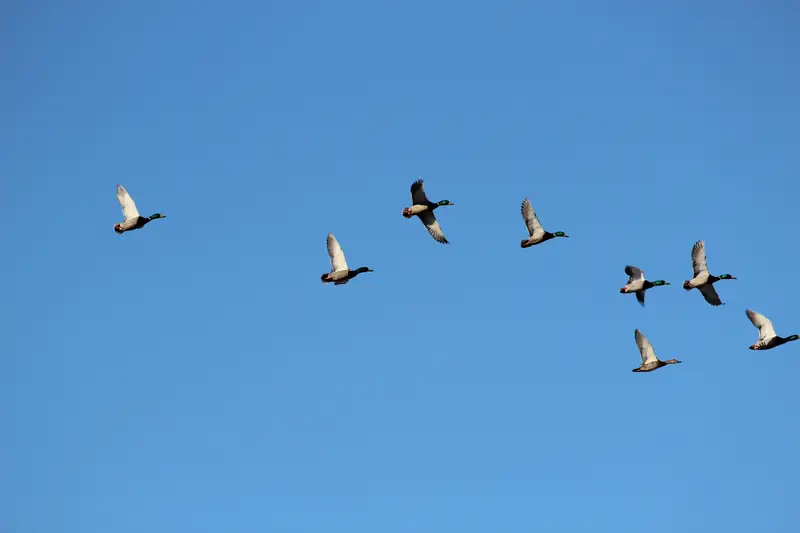
If you've been waiting on a wet fall, you're still waiting. Arkansas is in its 14th straight month of drought, and AGFC says there isn't water to begin flooding much of the state's traditionally flooded areas in late October and November (AGFC, Oct 7, 2026). The big rivers are low and still falling.
That doesn't mean a lost opener. In a drought, ducks don't disappear; they bunch up. Hunters who find the water that's left, and get to it safely, can still have good days. Here's how.
Where the water stands (read Oct 22, 2026, early morning Central)
| Spot | Gauge reading | What it means right now | Source |
|---|---|---|---|
| Mississippi River at Memphis | 2.85 ft, forecast falling to about −2.9 ft by Nov 4 | Sandbars exposed, sloughs cut off, Shelby Forest bottoms dry | NWS MEMT1 |
| Tunica Cutoff | Memphis gauge under 6 ft, the level where the river starts to enter the lake | The lake is cut off from the river and sitting at its weir-held pool (about 4,000 acres) | Tunica guide, from MDWFP |
| Cache River at Patterson, AR | 2.34 ft (flood stage is 9 ft) | Channel and oxbows only; timber dry | NWS PTTA4 |
| Reelfoot Lake | 11.06 ft on USGS gauge 07027000 (about 281.2 ft elevation) | About 1–2 ft below the lake's normal low-water mark; many grass holes and back blinds dry | USGS 07027000; Reelfoot guide |
| St. Francis Sunken Lands (Tulot) | About 209.8 ft (11 p.m. Oct 21) | About 2 ft under the 212-ft pool AGFC holds in duck season | USACE SF126; St. Francis guide |
| Loosahatchie at Arlington, TN | 0.7 ft (flood stage is 20 ft) | Low | NWS ARLT1 |
We'll refresh this table weekly. Live versions are on our migration map river layer.
Where the ducks go in a dry fall
1. Refuges and rest areas. Sanctuary water that's pumped or held by structures becomes the anchor for every bird in the area. Arkansas WMA rest areas close to all entry Nov 1–Feb 15 (AGFC Guidebook p. 44). Cache River NWR's sanctuaries close Nov 15–Feb 28 (Cache River NWR). Eagle Lake Refuge next to Shelby Forest closes to all use Nov 15 through the end of February (TWRA). The play: hunt the flight lines in and out, not the refuge boundary itself. Birds leave a refuge to feed and come back to rest. Find where they cross public water on the way.
2. Water held by structures. In a drought, the water that's left is the water somebody is holding back:
- St. Francis Sunken Lands has a managed duck-season pool, even if it's short of target right now.
- Tunica Cutoff holds its pool behind the Corps weir.
- Managed WMA units and moist-soil impoundments, where agencies can pump.
When AGFC or MDWFP posts that it has started pumping or closing structures on a unit, that unit moves to the top of the list.
3. The big river. A very low Mississippi has its own pattern. Exposed sandbars, slack eddies behind dikes and the mouths of cut-off sloughs give birds loafing water and grit. That's where a small spread on the downstream side of a bar can work. See our Mississippi River at Memphis guide for the reciprocity rules first: your Tennessee or Arkansas license works on the open river only on days both states are open (Nov 28–29, Dec 10–23, Dec 26–Jan 31), and WMAs and several tributaries are excluded (AGFC Code H1.03).
4. Open water and divers. Low water and above-average diver numbers go together nicely this year. Redheads and canvasbacks were 26% and 32% above their long-term averages in the 2026 breeding survey (USFWS). At Reelfoot, low water means dry pothole blinds. Moving to open-water edges with a few diver decoys mixed in is the low-water adjustment our Reelfoot guide covers.
5. Any new water. The first real rain after a long dry spell is a magnet. Puddle ducks find fresh sheet water fast. Keep an eye on the radar and the gauges, and be ready to move the day after.
Scouting in a drought
- Scout water first, birds second. Before you look for ducks, confirm the hole has water and you can get a boat to it. Last year's spot may be a mudflat.
- Use the gauges to compare years. Write down the gauge reading every time you scout or hunt a spot. After a season you'll know the number where your hole goes dry, and the number where it gets good. No agency publishes a "good duck stage" for these spots; you build your own.
- Watch the evening flight from a distance. Birds trading to and from refuges at last light show you the flight lines without bumping anything. On Cache River NWR, afternoon scouting for waterfowl isn't allowed (Cache River NWR), so scout from public roads and off-refuge.
- Satellite and aerial imagery: recent imagery shows you which sloughs still hold water. Check the date on the image.
- Check access before opening day, not on it. Low-water ramps can end in mud. Some areas also have closures. Reelfoot's Eagle Basin day-use area has been closed since June 12, 2026, and Long Park has a construction closure east of the ramp (Reelfoot guide, from Tennessee State Parks).
Check the rules and the water
Confirm this season’s rules on our state law pages or the agency’s own site, check draw and permit deadlines, and look at today’s river levels on the migration map. Areas can close or flood on short notice.
Setting up on low, crowded water
- Smaller spreads. With little water, birds are working small holes. A dozen decoys on a sliver of open water often looks more natural than four dozen.
- Shorter decoy lines on flats and shallow timber. Longer rigs or long-lines in river eddies.
- Leave a landing hole right where you want them, and keep it in easy range.
- Hide better than usual. With birds concentrated and pressured, the hunters who stay still and hidden do better than the ones who call more.
- Hunt mid-morning. On pressured public water, a second wave of birds often comes after the early shooters pack up. On Arkansas WMAs you still have to stop shooting at noon and be off the water by 1 p.m. (AGFC Guidebook p. 41).
- Expect neighbors. When there's only one wet spot, everyone knows about it. Get there early, give room, and have a Plan B before you launch.
Running a boat in low water
Low water is when good boats get wrecked and people get hurt.
- Run slow in the dark. Stumps, logs and sandbars that were under water last season are now right at the surface. A known route can be a new hazard.
- Sandbars aren't solid. The Corps of Engineers' Memphis District warns that sandbars can cave into deep, fast water even at low stages (USACE Memphis District). Don't let kids or dogs play at the edge, and don't beach the boat on a cut bank.
- Dikes and towboats: expect whirlpools around river dikes and big wakes from tows. Give barges plenty of room.
- Carry tools and a spare prop. Check the motor's water intake often on sandy, muddy water.
- Be legal on the motor. Many Arkansas waterfowl WMAs and several NWRs require factory or factory-equivalent exhaust (AGFC Guidebook p. 43). Some areas cap horsepower; read the listing.
- Wear the life jacket. Cold water and a sudden stop on a stump are a bad combination.
- Know where the river hunting stops. Inside Memphis city limits, the city code makes discharging a firearm a misdemeanor and lists no hunting exception (Memphis Code §10-32-4). Not confirmed We haven't confirmed how state hunting law interacts with that, so our advice is to stay off the downtown reach.
More on boat prep: Pre-Season Gear Prep.
When the rain finally comes
- Watch for a rise. On the Cache, a hard 2–3 inch rain in the upper watershed is the kind that pushes water out into the timber, and the ducks follow it downstream (Cache River guide).
- On the Mississippi, a rise back over about 6 ft at Memphis brings fresh river water into Tunica Cutoff (Tunica guide), and a bigger rise starts backing water into Shelby Forest's bottoms.
- Move the day after. The first hunters on brand-new water usually have the best shoot.
- Recheck the rules on newly flooded ground. Floodwater that spreads past a public waterway's banks onto private land isn't public water. Mississippi law and the Tennessee–Arkansas river agreement both say so, and neither river agreement lets you onto private land without permission (MDWFP digest; AGFC H1.03).
NOAA's outlook gives the Lower Mississippi Valley better-than-normal odds of a wet winter (our breakdown). Be ready for it.
FAQ
Where do ducks go during a drought in Arkansas?
They concentrate on refuges, managed impoundments, reservoirs, pumped fields and whatever natural water is left. Hunt the flight lines in and out of those areas, and move fast when new rain creates fresh water.
What river level floods Tunica Cutoff?
MDWFP says the Mississippi doesn't enter the lake until the Memphis gauge is above about 6 ft. Below that, the weir holds the lake at its pool (MDWFP Tunica Cutoff, checked Oct 22, 2026).
Is it safe to walk on Mississippi River sandbars?
Be careful. The Corps warns that sandbars can collapse into deep, fast water even when the river is low (USACE Memphis District).
Is Reelfoot Lake low right now?
Yes. The USGS gauge read 11.06 ft on Oct 22, 2026, about 1–2 ft below the lake's normal low-water mark. Expect dry grass holes and shallow ramps (USGS 07027000; Reelfoot guide).
Dates, rules and prices on this page were last checked Oct 22, 2026. If an agency page and this article disagree, the agency page wins.
See something wrong or out of date? Report a correction.
We hunt public water in the Mid‑South and write from the agencies’ own pages. Every rule, date and fee links to its official source and shows the day we checked it. Where we couldn’t confirm something, we say so.
How we check our facts